| ||
|
Thursday, October 17, 2019
Coming this way: Oregon and California!


Thursday, September 12, 2019
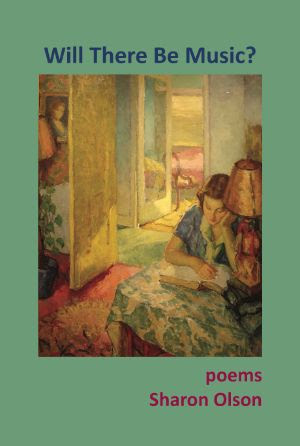
Newtown Library Company Reading Sept 20
Poetry Night: Sharon Olson
Who: Sharon Olson
When: Friday, September 20, 2019 at 7:30PM
Where: The Newtown Library Company, 114 E. Centre Ave. Newtown, PA
Bring a friend and a poem for the open mic!
 Sharon Olson is a retired librarian, a Stanford graduate, with an M.L.S. from U.C. Berkeley and an M.A. in comparative literature from the University of Oregon. Her chapbook Clouds Brushed in Later (1987) won the Abby Niebauer Memorial Chapbook Award, and a full-length book of poems, The Long Night of Flying, was published by Sixteen Rivers Press in 2006. Her second book Will There Be Music? was published by Cherry Grove Collections in early 2019. She has published (with co-author Chris Schopfer) numerous articles about the Sandford family of New Jersey in The Genealogical Magazine of New Jersey. She is a member of the U.S. 1 Poets’ Cooperative and also performs with the Cool Women Poets.
114 E Centre Ave, Newtown, PA 18940, USA
Who: Sharon Olson
When: Friday, September 20, 2019 at 7:30PM
Where: The Newtown Library Company, 114 E. Centre Ave. Newtown, PA
Bring a friend and a poem for the open mic!

114 E Centre Ave, Newtown, PA 18940, USA
Monday, May 27, 2019
Next Reading, June 10
Poets at the Library
Monday, June 10, 7:00 pm - 8:30 pm
Princeton Public Library, 65 Witherspoon St.
Newsroom, Second Floor
Featured poets Gretna Wilkinson and Sharon Olson read for 20 minutes from their works, followed by an open-mic session.

Sharon Olson is a retired librarian, a Stanford graduate, with an M.L.S. from U.C. Berkeley and an M.A. in comparative literature from the University of Oregon. Her chapbook Clouds Brushed in Later (1987) won the Abby Niebauer Memorial Chapbook Award, and a full-length book of poems, The Long Night of Flying, was published by Sixteen Rivers Press in 2006. Her second book Will There Be Music? was published by Cherry Grove Collections in early 2019. She has published (with co-author Chris Schopfer) numerous articles about the Sandford family of New Jersey in The Genealogical Magazine of New Jersey. She is a member of the U.S.1 Poets’ Cooperative and also performs with the Cool Women Poets.

Gretna Wilkinson began her career as a missionary teacher in the jungles of her native Guyana. She has performed her poems on radio and television and is published in Saranac Review, The Literary Review, and Poets of New Jersey: From Colonial to Contemporary, among others. She’s been featured in The New York Times, The Star Ledger, Courier News, and others. After 17 years as a college professor, she joined the Visual and Performing Arts Academy of Red Bank Regional High School where she ran the Creative Writing program. Her online literary magazine, theravensperch.com was nominated Top 10 Literary Blog on The Web (Feedspot). She is an honorary Eagle Scout, Monmouth County Art Educator of the Year, Red Bank Regional Teacher of the Year, and was recently named Claes Nobel Educator of Distinction.
Thursday, February 21, 2019
Ekphrastic Poetry: Part Four, Finding Comfort
 |
| Geertgen tot Sint Jans John the Baptist in the Wilderness |
 |
| Hieronymus Bosch The Extraction of the Stone of Madness |
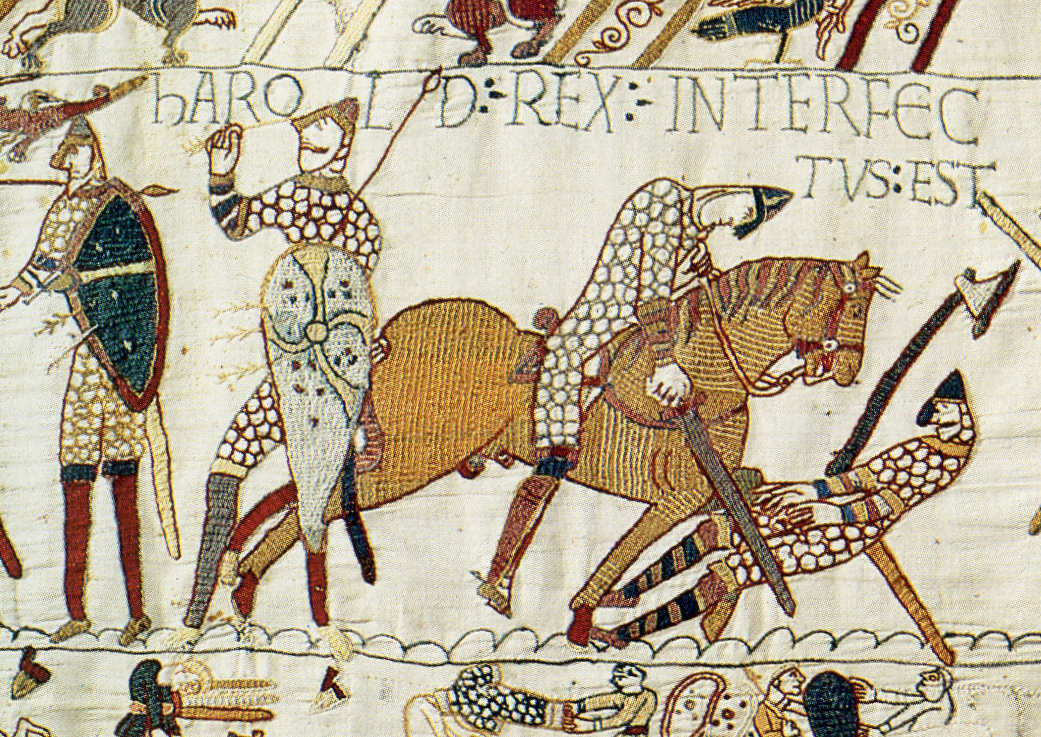 |
| Death of Harold Bayeux Tapestry |
By chance I came upon the story of a friend of mine, a librarian named Ellin Klor, who was clutching her knitting materials while running up some stairs, and inadvertently stabbed herself in the heart with one of the needles (she survived!). Somehow this tale fit so nicely with a long poem I was writing about Einstein ("how starlight bends around the sun"), color theory, horse racing, and the Bayeux Tapestry ("Heavenly Bodies Along the Rail"). The detail in the tapestry that captivated me was the place where the dying Harold is depicted ("a spear hanging like a tear from his eye").
 |
| Adoration of the Holy Wood Piero della Francesca |
 |
| Overlooking Arezzo Taken by author, 1967 |
 |
| Rembrandt The Three Trees |
 |
| Portrait of Masolino Town Hall, Panicale |
 |
| Basilica of Sant' Eustachio, Rome |
Finding comfort in art can be as simple as noticing a portrait looking down upon you as you are being married in a town hall (Masolino in "The Marriage Ceremony"), or seeking solace from the head of a stag on the front of a church ("Meditation in Rome").
The appearance of my father in a vivid dream, not long after his death, seemed at the time to remind me of the Raphael drawing I had seen long ago in the Vatican, The Miraculous Draught of Fishes ("the disciples reached down for the nets, sun on their muscled arms").
This ends my art tour. It has been a pleasure being your guide.
 |
Raphael, The Miraculous Draught of Fishes
|
Ekphrastic Poetry: Part Three, Portrait of the Artist

Sometimes it is not exactly a work of art that inspires a poem, it might be a death mask ("Nietzsche's Death Mask") or a desk left behind in a California mansion ("Franz Werfel in California, 1945"). One of the artists who has been a constant influence ever since I discovered him in a class on twentieth-century art is Emil Nolde, a complex figure whose works span the period from the 1880s to the 1950s. Nolde was born in a region claimed back and forth by both Denmark and Germany, but he always felt he was German, and many of his early paintings championed old Germanic myths and folk figures. This got him into trouble with the Nazi regime which interpreted these images as "degenerate," and banned his works from museums, and prohibited him from painting at all. Nolde himself espoused anti-semitic views, a viewpoint he later tried to expunge from his memoirs. My poem "Painted Into a Corner" celebrates his landscapes, which I have always found to be spectacular ("red skies all but overwhelming the naval blue mountains below them"), as well as his expressionist works ("those wild women shaking their naked bodies in a primitive dance").
 |
| Emil Nolde, Dance Around the Golden Calf, 1910 |
 |
| Emil Nolde, En Meer |
Wednesday, February 20, 2019
Ekphrastic Poetry: Part Two, Feminism in Art
 |
| Giovanni Pisano, Madonna and Child, 1301 |
 |
| Caryatids of the Erechtheion, Acropolis |
 |
| slopoet at the Acropolis, 1972 |
 |
| John Sloan, "The Picnic Grounds," 1906-7 |
 |
| Bernini, Apollo and Daphne, 1622-25 |
 |
| Posing with Henry Moore's Draped Reclining Woman at the Norton Simon Museum, Pasadena, 1985 |
 |
| slopoet with Henry Moore's Reclining Woman in front of Leeds Art Gallery |
I'm not particularly religious but nevertheless I've been drawn to
 |
| Hieronymus Bosch, Crucifixion of St. Julia/ St. Wilgefortis. |
On a trip to France in 1986 I visited the Abbey of Charlieu in Burgundy. There I was able to tour the
 |
| Detail, Abbey of Charlieu |
 |
| Marcel Duchamp, Nude Descending a Staircase No. 2, 1912 |
Tuesday, February 19, 2019
Ekphrastic Poetry: Part One
Fred Marchant said of many of the poems in my book Will There Be Music? that one might "call these poems ekphrastic...[or] an extended ode to the imagination and its many forms of expression." One of the goals of writing ekphrastic poems is to make them stand alone, to succeed without needing to see the work of art that is being written about. But no one can deny it is a pleasure to see both of them together, though few books of poetry come with illustrations.
I thought it would be fun to reveal some of the works of art that I was writing about in the twenty-four (my count) ekphrastic poems in my book. So this is Part One. In each part I will talk about a few of the poems, and reveal their inspiration.
"Paroxysms"
This poem is about my first year of college, when I was given permission to take three whole quarters of an upper-division class in Renaissance Art. The poem compares the paintings of the Mannerists, Madonnas with "elongated necks and twisted limbs" and those of their predecessors such as Raphael, "how the sweetness unnerved them." Two of Raphael's paintings are mentioned, Madonna of the Cardinal and Madonna of the Goldfinch. And in the final stanza, the landscape changes to that of "Rogier van der Weyden and the Hospice de Beaune." These are all references to paintings I later saw in my travels to Italy and France.
Nicolas Rolin was the man who founded the Hospice de Beaune. He also commissioned another famous work of art by Jan Van Eyck, The Virgin and Child with Chancellor Rolin, in which he is pictured seated with the Madonna and child. This work is referred to in another of my poems, "Chancellor Rolin Transported Downtown." In 2011 I decided to write a poem about a work of art to be featured in the Madison Art Society's annual show at the Scranton Library in Madison, Connecticut. This was part of a regular collaboration between the Society and the Guilford Poets Guild. I chose a pastel by Christine Ivers entitled "Empty Bed." I was intrigued by the title, and the way the man in the foreground was eyeing the nudes in an art gallery from his vantage point outside, looking through the window at night. My interpretation was that this was his consolation for having an "empty bed" at home. But what also captivated me was the way the whole thing reminded me of the Van Eyck painting. They both used three arches as a sort of motif. That was just the starting point as I ended up inventing a whole story that transcends many centuries, imagining Rolin as suddenly a modern figure who had once posed for a painting with a woman he knew...("We were playacting, she was a local model and the child, not hers"). There is another connection between the two works of art. The Christ child holds what is commonly referred to as an "orb and cross." If you turn this image upside down you get something that looks like the feminine symbol. And there is such a feminine symbol on the window of the art gallery in Ivers' work ("The insignia of Venus hanging over the entrance"). Here ends Part One.
I thought it would be fun to reveal some of the works of art that I was writing about in the twenty-four (my count) ekphrastic poems in my book. So this is Part One. In each part I will talk about a few of the poems, and reveal their inspiration.
"Paroxysms"
This poem is about my first year of college, when I was given permission to take three whole quarters of an upper-division class in Renaissance Art. The poem compares the paintings of the Mannerists, Madonnas with "elongated necks and twisted limbs" and those of their predecessors such as Raphael, "how the sweetness unnerved them." Two of Raphael's paintings are mentioned, Madonna of the Cardinal and Madonna of the Goldfinch. And in the final stanza, the landscape changes to that of "Rogier van der Weyden and the Hospice de Beaune." These are all references to paintings I later saw in my travels to Italy and France.
 |
| Parmagianino, Madonna with the Long Neck |
 |
| Raphael, Madonna of the Cardinal |
 |
| Nicolas Rolin, detail of Rogier van der Weyden's Last Judgment, Hospice de Beaune |
Nicolas Rolin was the man who founded the Hospice de Beaune. He also commissioned another famous work of art by Jan Van Eyck, The Virgin and Child with Chancellor Rolin, in which he is pictured seated with the Madonna and child. This work is referred to in another of my poems, "Chancellor Rolin Transported Downtown." In 2011 I decided to write a poem about a work of art to be featured in the Madison Art Society's annual show at the Scranton Library in Madison, Connecticut. This was part of a regular collaboration between the Society and the Guilford Poets Guild. I chose a pastel by Christine Ivers entitled "Empty Bed." I was intrigued by the title, and the way the man in the foreground was eyeing the nudes in an art gallery from his vantage point outside, looking through the window at night. My interpretation was that this was his consolation for having an "empty bed" at home. But what also captivated me was the way the whole thing reminded me of the Van Eyck painting. They both used three arches as a sort of motif. That was just the starting point as I ended up inventing a whole story that transcends many centuries, imagining Rolin as suddenly a modern figure who had once posed for a painting with a woman he knew...("We were playacting, she was a local model and the child, not hers"). There is another connection between the two works of art. The Christ child holds what is commonly referred to as an "orb and cross." If you turn this image upside down you get something that looks like the feminine symbol. And there is such a feminine symbol on the window of the art gallery in Ivers' work ("The insignia of Venus hanging over the entrance"). Here ends Part One.
 |
| Christine Ivers, Empty Bed, pastel (by permission of the artist) |
 |
| Jan Van Eyck, Virgin with Chancellor Rolin |
Subscribe to:
Posts (Atom)
